
Car Dent Repair Process in Dubai is an important consideration for vehicle owners dealing with dents caused by parking lot impacts, minor collisions, falling objects, or accidental door hits. Although a small dent may not affect your vehicle’s performance, it can reduce its visual appeal and, in some cases, lead to more extensive body damage if left untreated. Understanding the car dent repair process in Dubai can help vehicle owners know what happens during a repair and which method may be suitable for their vehicle. The repair process is not the same for every dent. Technicians consider the size, depth, location, panel material, and condition of the paint before deciding how to restore the damaged area. Some minor dents can be corrected without repainting, while deeper damage may require traditional bodywork and refinishing.
What Is the Car Dent Repair Process?
Car dent repair is a process of examining the damaged panel, determining the most appropriate repair technique, reshaping the affected area and restoring the original look of the vehicle.
In general, professional technicians start by looking at the dent from different angles. They look for damaged paint, stretched metal and any hidden damage behind the panel.
Once the assessment is done, the technician chooses an appropriate repair method. Depending on the condition of your vehicle it could be paintless dent repair, traditional dent repair, panel reshaping or re-paint.
That’s not the point here, to make the dent less obvious. A good repair will bring the panel back to its original shape and finish as much as possible.
How Car Dents Are Repaired in Dubai
How car dent repair in Dubai works The first thing to know about car dent repair in Dubai is that not all types of damage are treated equally.
1. Dent Inspection
The first thing is a detailed check. The technician assesses:
- Size and depth of dent
- Location of damaged area
- Paint condition
- body panel type
- Panel rear accessibility
- Present cracks or scratches
- Signs from previous work
This inspection will reveal if the dent can be repaired without paint or if additional bodywork is required.
2. Choosing the Repair Method
The technician inspects the damage and recommends a way to repair it. A shallow dent with intact paint might be a candidate for paintless dent repair, while a deep dent with cracked paint may require conventional repair.
It is important to choose the right method, as additional sanding or repainting may affect the original finish of the vehicle.
3. Reshaping the Damaged Panel
The technician delicately manipulates the broken part to bring it back to its original form. You can use special tools to get to the back of the panel, or you can work the damaged area from the outside.
Care must be taken to control the pressure applied. Additional deformation or paint damage may occur due to excessive force.
4. Surface Preparation
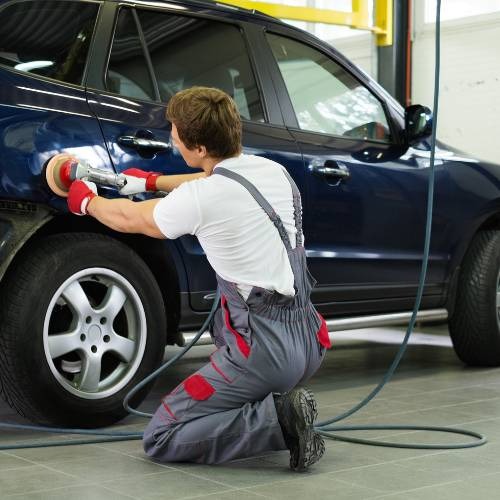
If the dent has damaged paint or created an uneven surface more prep work may be needed. This may involve filling, sanding and smoothing the affected area before you paint.
5. Paint Matching and Refinishing
If a dent needs to be repainted, technicians need to match the paint color and finish to the vehicle. Modern vehicles may have complex paint systems so proper prep and blending is important for a natural result.
6. Final Inspection
Once the repair has been completed, the panel is examined from different perspectives and under the appropriate lighting. The technician checks the shape, the paint finish, the fit of the panels, and the overall look.
Common Car Dent Removal Methods in Dubai
There are several car dent removal methods in Dubai, and the best option depends on the severity and location of the damage.
Paintless Dent Repair
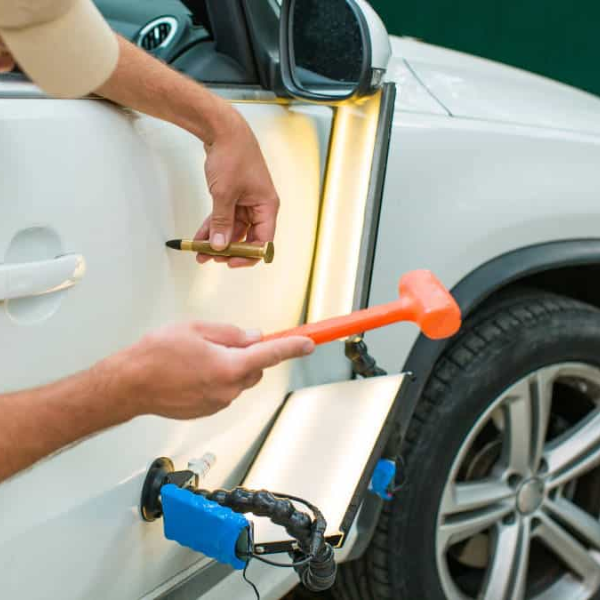
Paintless dent repair, commonly referred to as PDR, is a method of repairing dents without damaging the original paint.
Technicians use special tools to gently massage the panel from behind until the dent slowly disappears. This technique is especially effective in small dents since the original paint remains intact.
PDR can be used to:
- Dents to small car park
- Dings on the door
- Shallow dings
- Small impact marks
- Some hail dings
But it’s not suitable for every situation. For deep creases, severely stretched metal and damaged paint another approach may be needed.
Traditional Dent Repair
Traditional repair is usually used when the panel has great deformation or the paint is damaged.The process may involve reshaping metal, adding body filler as necessary, sanding the surface, priming, painting and polishing.This process typically requires more prep work than PDR but can repair damage that cannot be fixed with paintless techniques.
Dent and Paint Repair
If a dent has scratches, chipped paint or cracks, both body repair and refinishing may be needed. First, the damaged section is brought back into shape. The surface is then prepped and refinished to blend the repaired area with the surrounding paint.
Understanding Car Dent Repair Techniques
Different car dent repair techniques are used according to the type of damage.
Pushing From Behind
Technicians can also push out the dent from behind on accessible panels. It demands a delicate touch, as too much pressure can create unwanted high points.
Pulling the Dent
There are special equipment that can pop out some dents. The technician works slowly, easing the damaged metal back into place.
Body Filler and Sanding
If the damage is deeper, the panel can be recontoured and then body filler can be used. The surface is then sanded to a smooth finish ready for primer and paint.
Heat-Assisted Repair
In some instances, controlled heat may be used as part of a repair technique. This should only be done by trained professionals as too much heat can damage automotive paint or surrounding components.
Panel Replacement
If a panel is badly damaged and cannot be repaired properly, you may consider a replacement. This is usually a last resort when repair is not feasible or will not provide a satisfactory outcome.
How to Fix Car Dents: Professional vs. DIY Repair
There are many car owners who wish to save money or repair minor damage by themselves and therefore look for how to fix car dents. Some of the home methods may seem simple, but if you try to fix a dent without the right tools and experience, you could end up making a bad situation worse.
Professional repair is especially recommended when:
- The dent is deep.
- The paint is flaking
- Sharp creases in the panel
- The metal looks stretched
- The dent is near an edge
- Damage to several panels
The vehicle has had advanced paintwork or bodywork
The technician will be able to identify the damage and choose the repair method thus decreasing the chance of further damage.
Can Every Dent Be Repaired Without Painting?
No, paintless dent repair is only appropriate in certain cases.The original paint should normally be present and the panel should be able to be reshaped without damage. “Size, depth, location and shape of the dent all matter.If the paint is cracked or the panel is badly out of shape, then a conventional repair and repainting may be necessary.
How Long Does the Dent Repair Process Take?
The time to repair depends on the type and severity of damage.
A small dent can take a lot less time than a deep dent which will need body work and repainting. Scratches, multiple dents or difficult panel access can also add to the repair time.
Before starting the repair, it is a good idea to find out from the technician how long the repair will take and if there may be other work that will need to be done.
Factors That Affect the Repair Process
Several factors can influence how a dent is repaired.
Dent Size
Small dents are easier to repair than large areas of deformation.
Dent Location
A dent in an easily accessible location may be easier to repair than one near the edge of a panel or a reinforcement or a complex body line.
Paint Condition
Paint is in good shape, PDR may be possible, if paint is cracked or chipped, repainting may be required.
Panel Material
Different vehicle panels will be affected by different types of repair techniques. Aluminum and other materials may need special knowledge and equipment.
Previous Repairs
A panel that has already been repaired or repainted may react differently to another repair.
Why Professional Dent Repair Matters in Dubai
The traffic in Dubai and the parking lots are crowded, so there is a chance of small impacts and body damage to vehicles. Proper repair can restore your vehicle’s appearance and reduce the odds of worsening the damage.
A trained technician can also uncover problems that may not be apparent from the outside. A dent may look superficial but could mean damage to clips, brackets, sensors or components behind the body panel.
Thus, professional evaluation is much more than a cosmetic change. It helps to find out the proper repair method according to the real condition of the vehicle.
How to Choose a Dent Repair Professional
There are a few things to think about before you select a repair provider.
Check Experience
Search for technicians who have dealt with all types of dents and body panels on vehicles.
Ask About Repair Methods
A good repairman should be able to tell you whether PDR, standard repair, repainting or some alternative is the right one.
Request an Inspection
The dent appearance should not dictate the way you repair it. A thorough inspection can uncover hidden problems and help to give a more accurate estimate.
Compare Work Quality
If you can, look at examples of past repairs or client comments to get a sense of the quality of the work.
Ask About the Process
If you know what will be fixed, if painting is needed and how long the job might take then you can make a more educated decision.
Final Thoughts
Understanding the car dent repair process in Dubai makes it easier to decide what to do when your vehicle suffers body damage. The correct repair method depends on the dent’s size, depth, location, paint condition, panel material, and overall severity. Royal Car Experts provides professional guidance to help vehicle owners choose a suitable approach based on the actual condition of their car.
Minor dents with intact paint may be suitable for paintless dent repair, while deeper or damaged areas may require traditional bodywork and refinishing. Rather than choosing a repair technique based solely on cost, vehicle owners should consider the quality of the finished result and the long-term condition of the panel.
If you notice a new dent, having it professionally inspected by Royal Car Experts can help determine the most appropriate solution and prevent unnecessary repairs.
Frequently Asked Questions
What is the car dent repair process in Dubai?
The process usually begins with an inspection of the damage and then a suitable repair method is chosen. The technician reshapes the panel and does any needed surface prep or repainting and does a final quality inspection.
Can all car dents be repaired using paintless dent repair?
No . PDR is generally suitable for certain dents where the original paint is intact and the panel is accessible and can be reshaped . Deep dents, sharp creases and damaged paint may need conventional repair.
How do professionals repair small car dents?
Special tools are used to slowly push the panel back into shape and repair small dents. If the paint is not damaged, paintless dent repair may be an option.
What are the common car dent removal methods?
Typical methods include: Paintless dent repair Dent pulling Panel reshaping Traditional body repair Repainting The type and extent of damage determines how it is repaired.
How long does car dent repair take in Dubai?
The time it takes to fix a dent depends on the size, location and severity of the dent, paint damage and repair method. Minor dents usually require less work than extensive body damage.
Is it safe to fix a car dent at home?
DIY repairs can sometimes do more damage—especially if the wrong tools or too much force is used. For deep, creased, or paint-damaged dents, a professional evaluation is advised.